Our Dominican Heritage
Our story is deeply rooted in the vision of St Dominic, who founded the Dominican Order in 1216. Born in Spain in 1170, Dominic dedicated his life to preaching God’s truth through prayer, study and a deep love of Scripture. His mission was simple yet powerful: to contemplate the Word of God and share it with others.
This spirit continues to shape who we are today.
In 1899, a group of courageous Dominican Sisters, led by Mother Gabriel Gill, arrived in Western Australia. With faith, determination and a strong sense of purpose, they began building communities of learning across the state. From remote mining towns to rural farming regions, they worked tirelessly to ensure that children could access a Catholic education, often in challenging and isolated environments.
The Sisters were known for their joyful spirit, compassion and generosity. They responded to the needs of their time with creativity, establishing schools, supporting families in remote areas, and even developing innovative programs to reach students who could not attend school regularly.
Our Santa Clara School History
Santa Clara School began with a simple but powerful vision; to create a place where faith and learning could grow side by side.
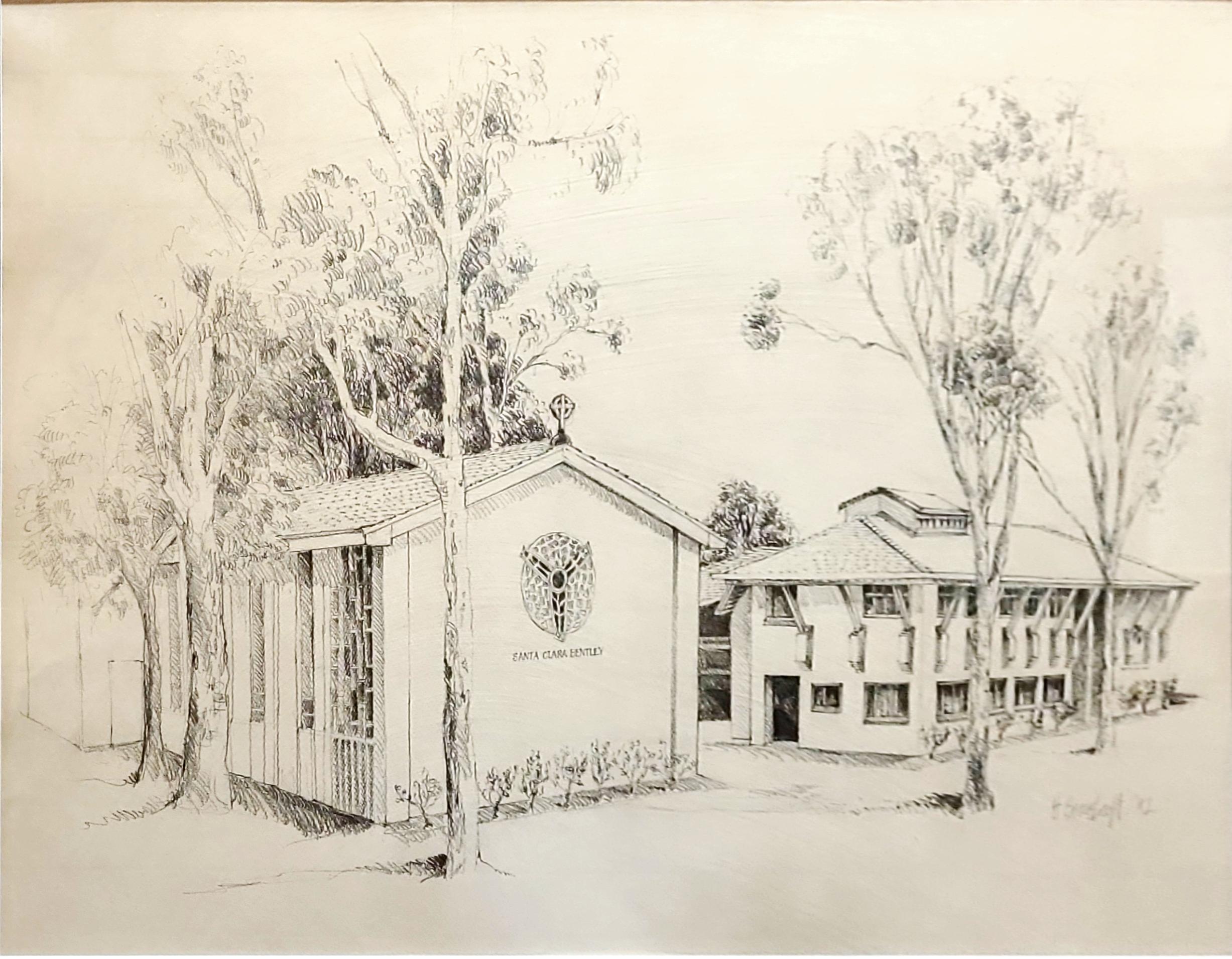
In 1952, that vision took shape in a humble one-room stone building, nestled in the heart of Bentley in the suburb of St James. This small space served as both a church and a classroom, built on the deep faith and determination of the local community. It was officially opened and blessed by Archbishop Prendiville, marking the beginning of something special.
By 1953, Santa Clara School was formally established, and just a few years later, in 1958, the Convent was built. The Dominican Sisters, inspired by the teachings of St Dominic, became the heart of the school. For nearly forty years, they taught, led and served with great love and dedication, shaping a strong foundation of faith, learning and community that still lives on today.
As the community grew, so did the school. A separate church was completed in 1963, and classrooms were expanded to meet the needs of a flourishing student population. What began as a single room had become a vibrant place of learning.
By the early 1990s, Santa Clara entered a new chapter. The original buildings made way for a modern two-storey school, completed in 1992, followed by the addition of the Pre-Primary in 1993. These new spaces reflected both growth and a renewed commitment to providing the best possible learning environment for every child. Through all these changes, one thing has remained constant: the spirit of the Dominican tradition. A spirit of prayer, study, community and service continues to guide Santa Clara, just as it did from the very beginning.
Today, our school stands proudly on the foundations laid by those early pioneers, who are honoured in our faction names. Santa Clara School honours its story today while continuing to grow, learn and look to the future with hope.
Our Crest
Our school crest draws inspiration from the life and story of St Dominic, reflecting the rich symbols and traditions of the Dominican heritage.
Each element tells part of a story of faith, truth and purpose.
The cross fleury, with its ends flowering into a lily shape, comes from Dominic’s mother, Jane of Aza. It is a symbol of sacrifice that blossoms into joy, reminding us that through faith and love, goodness can grow and flourish.
The black and white shield reflects Dominic’s family background, the Guzman lineage. These colours hold deep meaning; black symbolises penance and humility, while white represents joy and hope. Together, they capture the balance of a life lived with both reflection and celebration.
At the heart of the crest is the eight-pointed star, a powerful symbol in Dominican tradition. It recalls a story from Dominic’s baptism, where it is said that a star was seen shining on his forehead—a sign that his life would bring light to the world. Like a compass pointing in all directions, the star reminds us that we are called to share light, truth and hope wherever we go.
Finally, the word “Veritas”, meaning Truth, sits at the centre of our identity. For St Dominic, the search for truth was at the heart of his mission, to seek God through prayer and study, and to share God’s Truth with others through his words and actions.
Together, these symbols remind us of who we are called to be: people of Truth, guided by faith, bringing light, joy and compassion to our world.

Our School Factions
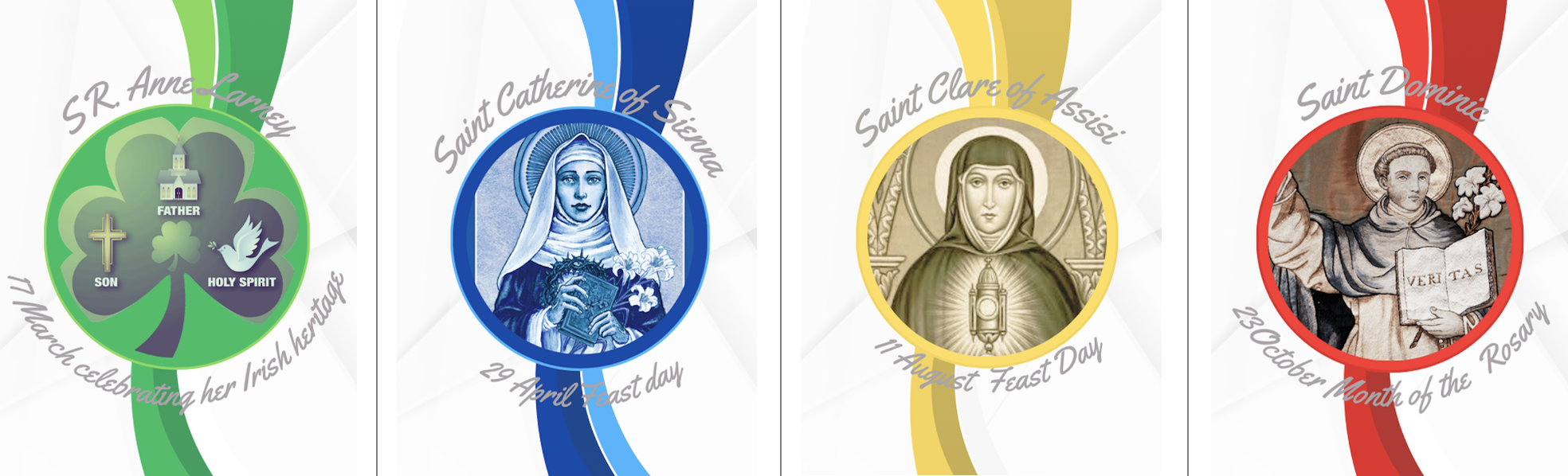
Larney
A Lasting Legacy: Sister Anne Larney
Sister Anne Larney holds a special place in the story of Santa Clara School.
She first arrived in the 1960s as a young Dominican Sister, then known as Sister M. Bernard. Living in the convent alongside other Sisters, she was part of a time when the school was almost entirely led by the Dominican community. Her early years at Santa Clara were marked by dedication to teaching and a deep commitment to faith and service.
After some years, she left to continue her ministry in regional Western Australia, serving in Dominican schools and as part of the Motor Mission, supporting families and communities in remote areas.
In 1983, Sister Anne returned to Santa Clara as Principal, beginning a remarkable chapter in the school’s history. Over the next decade, she led with strength, warmth and vision, building a staff culture that was professional, united and deeply committed to the wellbeing of every child. Under her leadership, the school became a place where students and families felt safe, supported and truly known.
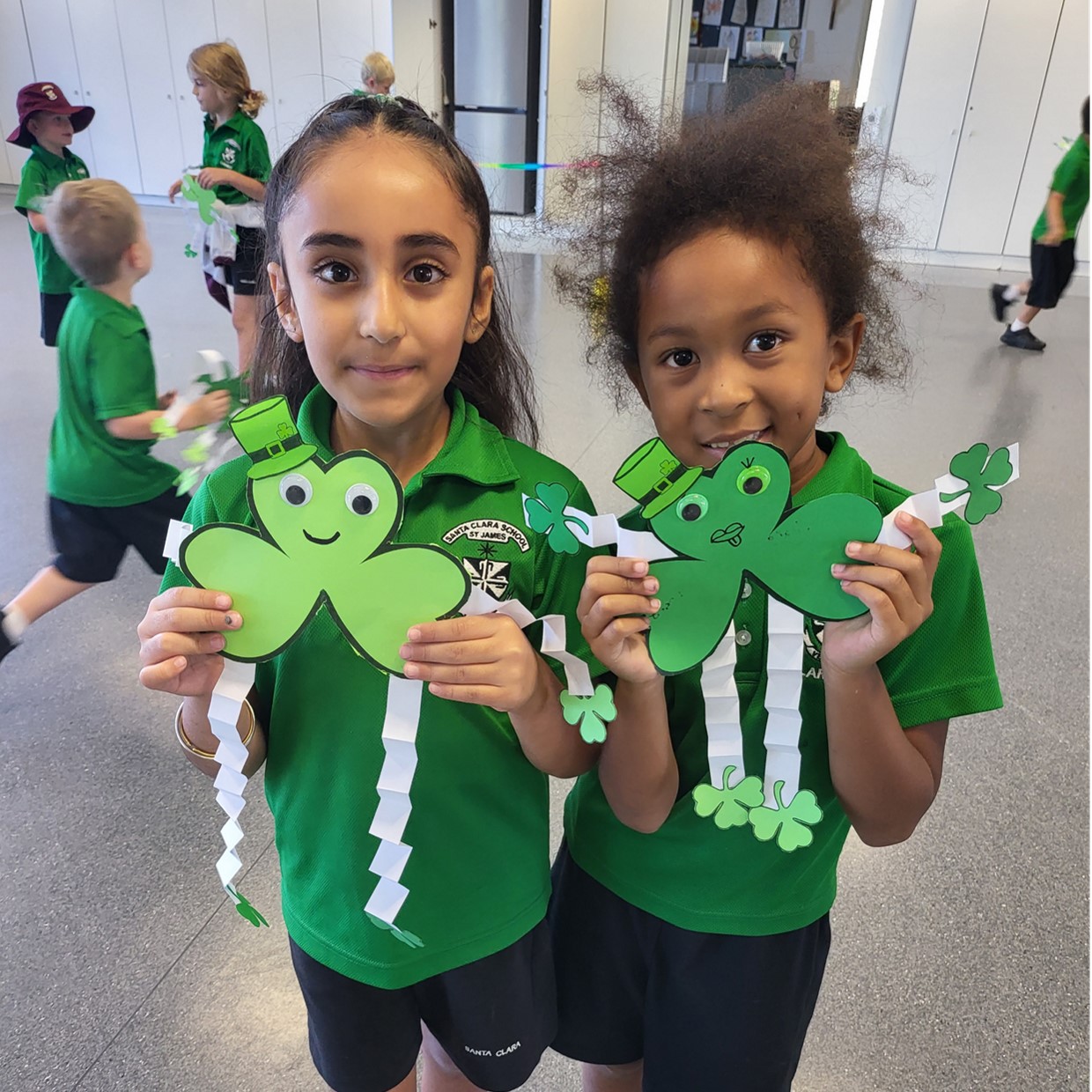
One of her most significant contributions was overseeing the complete redevelopment of the school. The modern two-storey buildings we use today. Sister Anne also brought joy and tradition to school life. She proudly celebrated her Irish heritage, sharing this with the community through music, dance and special feast days, creating moments of connection and celebration that are still celebrated today.
As the last Dominican Principal of Santa Clara, Sister Anne leaves a legacy that goes far beyond buildings. She is remembered for her deep faith, her compassion, and the genuine care she showed to all. Her example continues to inspire, reminding us of the power of strong relationships, high expectations and a heart grounded in service.
Dominic
The Story of St Dominic
St Dominic was born in 1170 in Caleruega, Spain, into a family of faith and generosity. His father, Felix Guzman, and his mother, Blessed Joan of Aza, raised him with a deep love for God and a strong sense of compassion for others.
From a young age, Dominic showed a passion for learning and prayer. At just seven years old, he went to study with his uncle, a priest. As he grew, he devoted himself to study, faith and a simple life of service, eventually becoming a priest.
But Dominic’s story did not remain quiet for long. During a journey through France, he encountered communities that had been led away from the teachings of the Church. Rather than turning away, Dominic responded with compassion. He saw people searching for meaning and truth—and he felt called to help. With humility and courage, he began preaching the message of Christ, not only through his words but through the way he lived his life.
Dominic believed that truth is best shared through example. He lived simply, travelled on foot, prayed deeply and treated every person with dignity and respect. People were drawn not just to what he said, but to how he lived—with honesty, kindness and unwavering faith. In 1216, Dominic founded the Order of Preachers, now known as the Dominicans. His vision was to create a community dedicated to prayer, study, preaching and service. He also established a community of women religious, recognising the important role of prayer and support in the Church’s mission.
Dominic’s life was marked by extraordinary compassion. During a time of famine in Spain, he sold his possessions, even his precious books, to feed those who were hungry, saying that people mattered more than anything he owned. His actions showed that love of God is always lived out through love of others.
Today, the legacy of St Dominic continues to inspire. His story reminds us that each of us is called to live with courage, to seek what is true, and to bring light and hope to those around us.
Clare
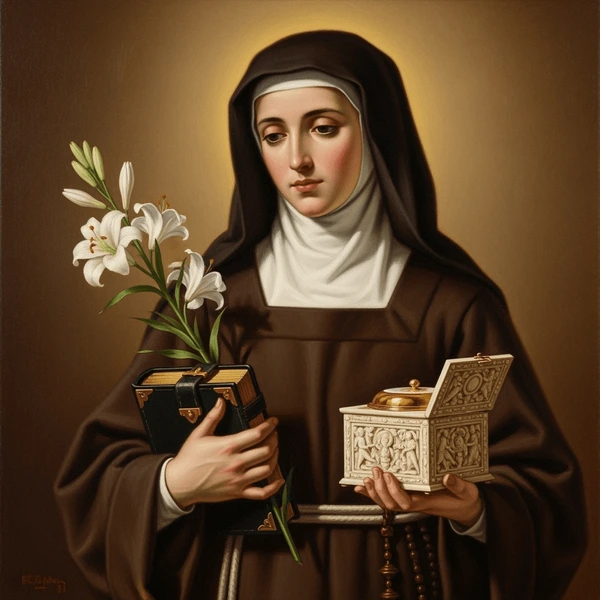
The Story of St Clare of Assisi
St Clare was born in Assisi, Italy, in 1194. As a young woman of noble birth, Clare lived a comfortable life—but deep within her, she longed for something more.
At the age of 18, Clare heard St Francis of Assisi preach. His message of living simply, trusting in God, and finding joy in poverty deeply moved her. Inspired by his words, Clare made a courageous decision that would change her life forever.
On the night of Palm Sunday, she quietly left her home to follow this calling. In a small chapel, Francis welcomed her, and Clare chose to give her life completely to God. She let go of her wealth and status, embracing a life of simplicity, prayer and deep faith.
Clare went on to found a community of women dedicated to this way of life, known as the Poor Clares. As their leader for many years, she guided others to live with humility, trust in God and a strong sense of community.
Her life was one of quiet strength, courage and unwavering commitment.

Catherine
The Story of St Catherine of Siena
St Catherine of Siena was born in Italy in 1347 and lived a short but extraordinary life, passing away at just 33. Despite her young age, her faith, courage and wisdom had a lasting impact on the Church and the world. She was later named a Doctor of the Church and is one of the patron saints of Europe. From a very young age, Catherine experienced a deep connection with God. As a child, she had a powerful vision of Jesus that shaped the rest of her life. She chose to dedicate herself completely to God, even when her family hoped she would marry. With courage and determination, she followed her calling, committing her life to prayer, service and truth.
Catherine became part of the Dominican family, inspired by the teachings of St Dominic. Like Dominic, she sought truth and shared it boldly. She was not afraid to speak out, even to powerful leaders, always guided by her deep faith and desire for justice.
Her life was also marked by compassion. During times of great sickness and hardship, she cared for the poor and the sick, especially those others were afraid to help. She lived out the Gospel through action, showing love, courage and selflessness in everything she did.
Catherine’s story also connects closely with St Clare of Assisi. Like Clare, she chose a life centred on God, marked by simplicity, prayer and trust. Both women showed great courage in following their faith and became powerful examples of how one person can make a difference.
Despite limited formal education, Catherine went on to write hundreds of letters and important spiritual works, sharing wisdom that continues to inspire today.